Der Drache an der Wurzel des Weltbaums, der durch alle Zeit nagt
Überblick
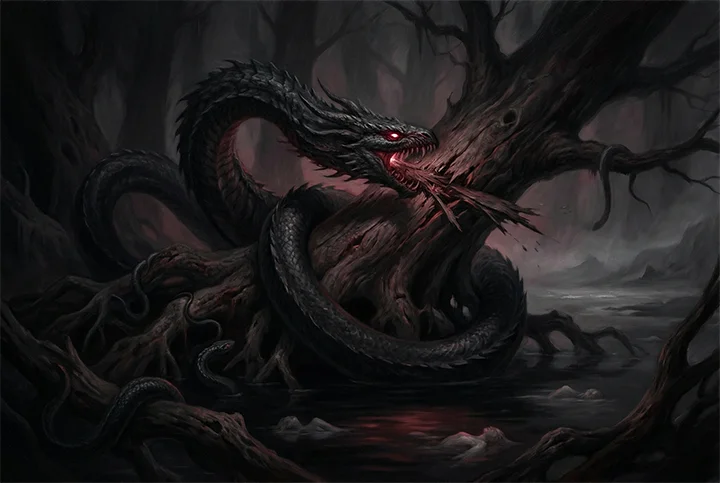
Níðhöggr ist ein Drache oder eine Schlange von enormer Macht, die ununterbrochen an den Wurzeln von Yggdrasil nagt, dem Weltbaum, der die Neun Welten in ihrer richtigen Anordnung hält. Der Name bedeutet Schadensschläger oder Leichennager, und das Wesen kombiniert beide Funktionen in den Quellen: Es greift die grundlegende Struktur des Kosmos an, indem es an den Wurzeln des Baumes kaut, der ihn erhält, und es ernährt sich von den Leichen der schlimmsten Toten in Náströnd, dem Leichenufer in Hel. Níðhöggr ist kein Gott, kein Riese im herkömmlichen Sinne, sondern ein urzeitliches Wesen der Zerstörung, dessen kontinuierliche Aktivität gegen den Weltbaum die entropische Kraft darstellt, die von innen gegen den geordneten Kosmos arbeitet.
Quellen
Die Hauptquellen für Níðhöggr sind die Voluspa und das Grimnismal in der Poetischen Edda sowie das Gylfaginning der Prosa-Edda. Die Voluspa erwähnt Níðhöggr an zwei bedeutsamen Stellen. Nahe dem Anfang des Gedichts beschreibt die Seherin eine Halle am Leichenufer weit von der Sonne entfernt, deren Türen nach Norden zeigen, wo die schlimmsten Mörder und Meineider durch Giftströme waten, während Níðhöggr die Leichen der Toten aussaugt. Nahe dem Ende des Gedichts, im Abschnitt, der beschreibt, was nach Ragnarök kommen wird, sieht die Seherin Níðhöggr von unten von den dunklen Bergen fliegend, Leichen in seinen Flügeln tragend.
Das Grimnismal enthält die detaillierteste kosmologische Beschreibung von Yggdrasil und den Wesen, die in und um ihn herum leben, einschließlich Níðhöggr. Odin verkleidet beschreibt den Adler, der oben auf Yggdrasil sitzt, das Eichhörnchen Ratatoskr, das den Baum auf und ab läuft und Beleidigungen zwischen dem Adler und Níðhöggr an den Wurzeln trägt, und die Schlangen, die an der Basis des Baumes liegen und an ihm nagen. Snorris Bericht im Gylfaginning beschreibt Níðhöggr, das von unten an den Wurzeln Yggdrasils nagt, identifiziert die drei Wurzeln des Baumes als sich nach Asgard, nach Jotunheim und nach Niflheim erstreckend, und lokalisiert Níðhöggr speziell an der Wurzel, die sich nach Niflheim erstreckt, nagend daran vom Brunnen Hvergelmir im Urreich des Eises und Nebels.
Níðhöggr und Náströnd
Die Beschreibung der Voluspa von Níðhöggr, das Leichen in Náströnd, dem Leichenufer, frisst, liefert eines der lebendigsten Bilder in der nordischen Jenseitsvorstellung. Náströnd wird als eine Halle weit von der Sonne entfernt beschrieben, deren Türen nach Norden zeigen. Die Wände und das Dach der Halle sind aus Schlangen gewebt, und das Gift, das aus den Körpern der Schlangen tropft, fließt in Strömen durch die Halle, durch die die schlimmsten Toten waten müssen. Diejenigen, die dort wohnen, werden als Mörder, Eidbrecher und diejenigen benannt, die die Frauen anderer verführen, Verbrechenskategorien, die grundlegende Verletzungen der Bande darstellen, die menschliche Gemeinschaften zusammenhalten.
Ratatoskr und der Adler
Das Eichhörnchen Ratatoskr, dessen Name Bohrzahn oder Nagezahn bedeutet, läuft den Stamm von Yggdrasil auf und ab und trägt Nachrichten zwischen dem Adler oben und Níðhöggr unten. Die Nachrichten sind nicht neutral: Ratatoskr trägt Beleidigungen und Provokationen zwischen den beiden, absichtlich die Feindschaft zwischen dem kosmischen Vogel der Ordnung und der kosmischen Schlange der Zerstörung anheizend. Dieses Detail ist bedeutsam, weil es die Spannung zwischen der Spitze und dem Boden des Weltbaums als etwas zeigt, das aktiv aufrechterhalten und verschärft wird.
Níðhöggr bei Ragnarök und danach
Die Beschreibung der Voluspa von Níðhöggr, das nach Ragnarök fliegt, Leichen in seinen Flügeln über die neue Welt tragend, die aus dem Meer aufsteigt, ist eines der markantesten eschatologischen Bilder der nordischen Mythologie. Die meisten zerstörerischen Kräfte werden bei Ragnarök verzehrt oder vernichtet, aber Níðhöggr überlebt. Das Wesen, das an den Wurzeln der alten Welt nagte, fliegt über die neue, immer noch die Toten tragend.
Vermächtnis und Bedeutung
Níðhöggr repräsentiert das Prinzip der destruktiven Entropie in der nordischen Kosmologie, die Kraft, die von innen an der Struktur des Kosmos arbeitet, um ihn zu untergraben und aufzulösen. Seine Position an der Wurzel von Yggdrasil, nagend an der Grundlage des Weltbaums, der alle neun Welten an ihrem Platz hält, macht es zur fundamentalsten Bedrohung im nordischen mythologischen Universum. Das Eichhörnchen Ratatoskr, das Beleidigungen zwischen dem Adler und Níðhöggr trägt, stellt sicher, dass die Spannung nicht aufgelöst, sondern ständig erneuert wird und das dynamische Gleichgewicht zwischen den Kräften der Ordnung und der Auflösung aufrechterhält, das das fortlaufende Leben des Kosmos ausmacht.