Die größte der isländischen Sagas und die Geschichte von Recht, Ehre und Feuer
Überblick
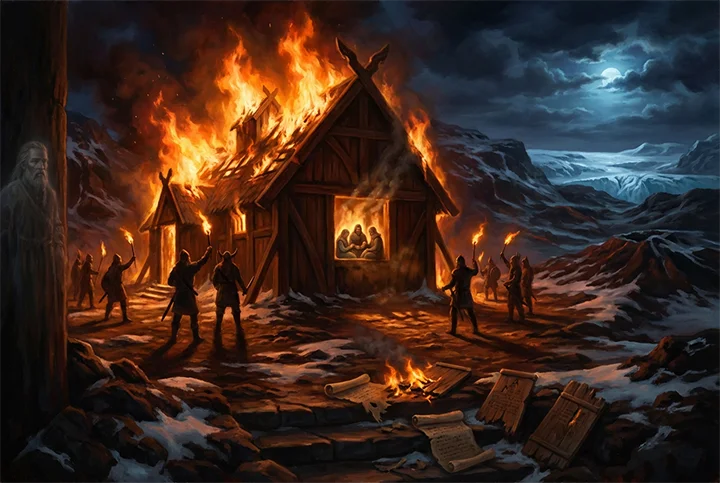
Njáls saga, auch bekannt als Brennu-Njáls saga, die Saga vom verbrannten Njáll, ist die längste und gefeierte der isländischen Familiensagas, in Island im späten dreizehnten Jahrhundert verfasst und in zahlreichen Manuskripten überliefert, von denen das älteste Fragment auf etwa 1300 datiert. Sie erzählt die Geschichte zweier enger Freundschaften, zweier Familien und der Kette von Tötungen, Rechtsstreitigkeiten und Racheakten, die folgt, als diese Freundschaften zerstört werden, und erstreckt sich über mehrere Generationen bis hin zur lebendigen Verbrennung des Anwalts Njáll Þorgeirsson und seiner Familie in ihrem eigenen Bauernhaus in Bergþórshvoll. Die Saga ist bemerkenswert für die Dichte und Präzision ihrer Rechtsinhalte, die psychologische Tiefe ihrer Hauptcharaktere, die Qualität ihrer Erzählstruktur und ihre Behandlung der Bekehrung Islands zum Christentum im Jahr 1000 als Wendepunkt der Handlung.
Die Saga spielt in der Zeit von etwa 960 bis 1020, den letzten Jahrzehnten der alten nordischen heidnischen Welt und den ersten Jahrzehnten der christlichen Periode in Island. Njáll selbst, der größte Anwalt Islands, arbeitet während der gesamten Saga daran, jeden potenziellen Konflikt in eine rechtliche Einigung umzuwandeln und zu verhindern, dass der Kreislauf der Rache eskaliert. Er scheitert, aber das Scheitern ist nicht nur seines; es ist das Scheitern eines sozialen Systems, in dem Recht und Ehre in entgegengesetzte Richtungen ziehen.
Hauptcharaktere
Njáll Þorgeirsson ist die zentrale Figur der Saga, ein Mann von außerordentlichem rechtlichen Wissen und Weisheit, beschrieben als unfähig, einen Bart wachsen zu lassen, ein physisches Detail, das in der Sagatradition mit Weisheit und zweitem Gesicht verbunden ist. Er ist Bauer in Bergþórshvoll im Süden Islands, tief geliebt und respektiert, der sein Leben damit verbringt, Konflikte durch rechtliche Mittel zu verhindern. Er hat die Gabe der Voraussicht, was bedeutet, dass er die Kette der Konsequenzen sehen kann, die jeder Handlung folgt, und die Tragödie seines Lebens ist, dass er sehen kann, was kommt, ohne es aufhalten zu können.
Gunnar Hámundarson von Hlíðarendi ist Njálls engster Freund, der größte Krieger Islands in den frühen Abschnitten der Saga, ein Mann von außergewöhnlichen körperlichen Gaben, beschrieben als fähig, seine eigene Höhe vollständig bewaffnet zu springen, mit der linken Hand genauso gut zu kämpfen wie mit der rechten und zwei Speere gleichzeitig zu werfen. Er ist gutmütig, langsam in der Wut und aufrichtig zögerlich zu töten, doch die Kombination aus seinem Ruf und den Provokationen seiner Frau Hallgerðr zieht ihn in Konflikt nach Konflikt, bis er geächtet und dann an seinem eigenen Hof von einer Gesellschaft von Feinden getötet wird.
Hallgerðr Höskuldsdóttir, Gunnars Frau, ist eine der komplexesten weiblichen Figuren in der Sagaliteratur. Sie ist schön, stolz, scharfzüngig und erinnerungsreich, von Kindheit an als jemand mit den Augen eines Diebes beschrieben. Ihr Diebstahl von Lebensmitteln von einem benachbarten Bauernhof ist die Tat, die die letzte Abfolge von Ereignissen in Bewegung setzt. Im Moment von Gunnars Tod, als er seine Bogensehne gebrochen hat und Hallgerðr um eine Haarsträhne bittet, um sie neu zu bespannen, lehnt sie ab und erinnert ihn an eine Ohrfeige, die er ihr vor Jahren gab. Diese Verweigerung ist einer der berühmtesten Momente der Sagaliteratur.
Skarpheðinn Njálsson ist eine beherrschende Figur in der zweiten Hälfte der Saga. Er ist ein beeindruckender Kämpfer, dunkelhäutig, schlagfertig und mit einem grimmigen Sinn für Humor ausgestattet. Sein Gleitkill von Þráinn Sigfússon auf dem zugefrorenen Fluss bei Markarfljót ist die technisch detaillierteste Gewalttat der Saga.
Flosi Þórðarson von Svínafell, der Anführer der Verbrennerpartei, ist der moralisch komplexeste Antagonist der Saga. Er ist kein Bösewicht, sondern ein Ehrenmann, der sich durch Verwandtschaftsansprüche und die Anforderungen des Ehrenkodex gebunden findet, eine Tat anzuführen, die er für monströs hält.
Der rechtliche Rahmen
Njáls saga ist einzigartig in der isländischen Literatur für die Tiefe und Genauigkeit ihrer Auseinandersetzung mit dem isländischen Rechtssystem. Das Althing, die jährliche Generalversammlung in Þingvellir, ist der Schauplatz mehrerer der wichtigsten Szenen der Saga, und die dort beschriebenen Rechtsverfahren stimmen mit dem überein, was aus anderen Quellen über das isländische Recht in der Gemeinwesenperiode bekannt ist. Njálls Rechtsgenialität wird wiederholt demonstriert, am bemerkenswertesten in seiner Erfindung des Fünften Gerichts, eines neuen Berufungsgerichts, das er das Althing überzeugt zu etablieren, um eine Jurisdiktionssackgasse in der Verfolgung der Verbrenner zu lösen.
Die Verbrennung
Die Verbrennung von Njáll und seiner Familie in Bergþórshvoll ist die zentrale Katastrophe der Saga. Flosi und seine Partei umzingeln das Bauernhaus bei Nacht. Njáll weigert sich zu gehen. Er sagt, er sei ein alter Mann und könne seine Söhne nicht rächen, und er wolle nicht in Schande leben. Seine Frau Bergþóra weigert sich, ihn zu verlassen. Flosi bietet den Frauen und Kindern freien Durchgang aus dem brennenden Haus an. Die Kinder gehen. Bergþóra bleibt bei ihrem Mann.
Im Innern des Hauses legen sich Njáll und Bergþóra auf ihr Bett und ziehen die Ochsenhaut über sich. Als das Feuer das Haus verzehrt hat und die Leichen geborgen werden, werden Njálls und Bergþóras Körper unversehrt und unverweset unter der Ochsenhaut gefunden, ein Detail, das in der Saga als Zeichen der Heiligkeit interpretiert wird, das christlichem Martyrium entspricht.
Kárís Rache
Kári Sölmundarson, der Mann von Njálls Tochter Helga und das einzige Mitglied des Haushalts, das aus der Verbrennung lebend entkam, führt die anschließende Rache durch. Seine Kampagne gegen die Verbrenner dauert Jahre und führt ihn von Island zu den Orkney-Inseln, nach Schottland, Irland und Norwegen, bevor er nach Island zurückkehrt. Er tötet die Verantwortlichsten der Verbrenner einzeln in diesen Gebieten.
Die Saga endet nicht mit anhaltender Gewalt, sondern mit Versöhnung. Kári, von einer Reise nach Rom zurückkehrend, wo er eine Pilgerreise gemacht und Absolution erhalten hat, wird durch einen Sturm nach Svínafell, dem Hof von Flosi, dem Mann, der die Verbrennung angeführt hatte, getrieben. Flosi empfängt ihn und bietet Einigung an. Kári nimmt an. Flosi gibt ihm seine Nichte Hildigunnr zur Heirat, die Frau, deren Forderung nach Rache für die Tötung ihres Mannes die unmittelbare Ursache der Verbrennung war.
Quellen und Komposition
Njáls saga schöpft aus mündlichen Traditionen über die beschriebenen Ereignisse, aus früheren schriftlichen Sagas und Þættir und aus dem Wissen des Autors über isländisches Recht und Geschichte. Die historischen Figuren, einschließlich Gunnar, Njáll, Skarpheðinn und Flosi, erscheinen in anderen Quellen und werden allgemein als historisch akzeptiert, obwohl die sie umgebende Erzählung vom anonymen Autor wesentlich geprägt wurde. Die Saga ist in mehr Manuskripten erhalten als jede andere isländische Familiensaga.
Vermächtnis und Bedeutung
Njáls saga wird seit ihrer Komposition im späten dreizehnten Jahrhundert kontinuierlich gelesen und hat mehr wissenschaftliche Aufmerksamkeit auf sich gezogen als jeder andere Text der altnordischen Literatur. Ihre Kombination aus rechtlicher Präzision, psychologischer Komplexität, moralischem Ernst und erzählerischem Geschick macht sie einzigartig in der mittelalterlichen europäischen Literatur, ein Text, der sich mit Fragen der Gerechtigkeit, Ehre, Vergebung und dem Verhältnis zwischen Recht und Gewalt in einer Weise auseinandersetzt, die über sieben Jahrhunderte des Lesens philosophisch ernst bleibt.
OTHRAVAR — Musikalische Hommage
Erleben Sie das Gewicht von Recht und Ehre, den Geruch des Brandes und den langen Weg der Rache durch die alten Klänge nordischer Volksmusik. Diese Originalkomposition schöpft aus der skaldischen Tradition und wird mit traditionellen Instrumenten wie Tagelharpa, Langeleik und Rahmentrommel aufgeführt.