Reich der Menschen
Überblick
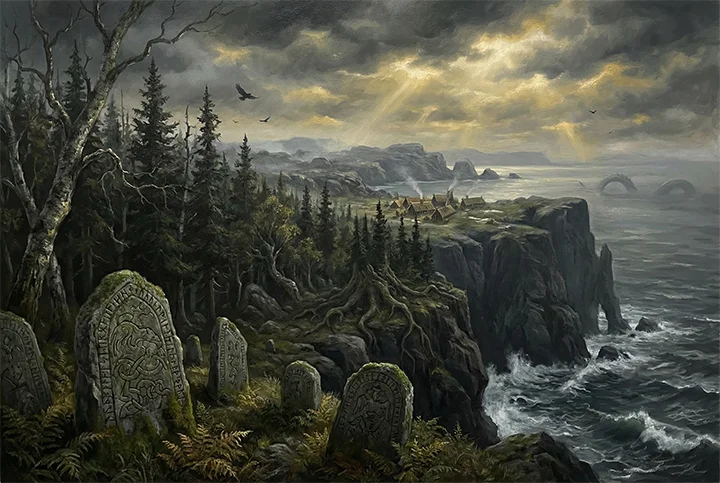
Midgard, im Altnordischen Miðgarðr genannt, ist das Reich der Menschheit, die Welt, in der Menschen ihr Leben zwischen der göttlichen Ordnung oben und den primordialen Kräften unten führen. Sein Name bedeutet "mittleres Gehege" oder "mittleres Reich" und spiegelt seine Position in der Mitte der nordischen kosmologischen Karte wider: vom Ozean umgeben, unter Asgard, jenseits dessen Ränder die Länder der Riesen und Monster liegen. Es ist das einzige Reich im nordischen Kosmos, das ausdrücklich als für menschliche Besiedlung gemacht beschrieben wird, und seine Erschaffung aus dem Körper des erschlagenen Riesen Ymir verbindet menschliche Existenz direkt mit dem ursprünglichsten Akt göttlicher Gewalt in der nordischen Mythologie.
Midgard ist mit Asgard durch die Bifrost-Brücke verbunden, den schimmernden Regenbogenweg, der über den Himmel verläuft und es den Göttern ermöglicht, zwischen dem göttlichen Reich und der menschlichen Welt zu reisen. Diese Verbindung ist nicht nur geographisch, sondern theologisch: Die Götter haben eine Beziehung zu Midgard und seinen Bewohnern, die weit über bloße Beobachtung hinausgeht. Sie greifen ein, beraten, testen und schützen manchmal die dort lebenden Menschen, während sie ihre eigenen Agenden über die Neun Welten hinweg verfolgen.
Der Weltmeerozean, der Midgard umgibt, ist selbst eines der bedeutendsten geographischen Merkmale des nordischen Kosmos. In seinen Tiefen liegt die Weltschlange Jörmungandr, Lokis monströser Nachkomme, um die gesamte Midgard aufgerollt mit dem Schwanz im eigenen Mund. Er ist die lebende Grenze der menschlichen Welt, das Wesen, dessen Existenz den Rand des Bekannten definiert und dessen eventuelle Befreiung bei Ragnarök das Ende des Zeitalters ankündigen wird, in dem Menschen gelebt haben.
Ursprung und Mythologie
Midgard wurde von Odin und seinen Brüdern Vili und Vé aus dem Körper des erschlagenen primordialen Riesen Ymir erschaffen. Gemäß der Prosa-Edda verwendeten die Brüder Ymirs Fleisch, um die Erde zu machen, sein Blut für die Meere und Seen, seine Knochen für die Berge, seine Zähne und Kieferfragmente für die Felsen und Steine, seinen Schädel für den Himmel und sein Gehirn für die Wolken. Die Erde wurde dann als kreisförmig beschrieben, vom tiefen Ozean umgeben, mit Asgard darüber im Himmel errichtet.
Die Götter umgaben Midgard mit einer Schutzmauer, die aus Ymirs Augenbrauen gebaut wurde, um die Riesen fernzuhalten, die jenseits des Ozeans an den Rändern der Welt lebten. Jötunheimr, das Reich der Riesen, liegt direkt jenseits dieser Grenze. Die Spannung zwischen Midgard als geschütztem menschlichem Raum und Jötunheimr als der umgebenden Wildnis ist eines der fundamentalen Organisationsprinzipien der nordischen Mythologie: Zivilisation und Chaos, das Kultivierte und das Ungezähmte, immer in der Nähe und niemals vollständig sicher voreinander.
Die ersten Menschen, Askr und Embla, wurden aus einer Esche und einer Ulme erschaffen. Odin gab ihnen Atem und Leben, Vili gab ihnen Witz und Gefühl, und Vé gab ihnen Form, Sprache, Gehör und Sehvermögen. Sie wurden in Midgard platziert, um es zu bevölkern, und von ihnen abstammte die gesamte Menschheit.
Wichtige Geschichten und Auftritte
Midgard erscheint im gesamten nordischen Mythenzyklus als das Reich, das die Götter sowohl schützen als auch nutzen. Thors primäre Funktion ist die Verteidigung Midgards gegen die Riesen und Monster, die es ständig zu überwältigen drohen. Seine Reisen nach Jötunheimr sind keine abstrakten göttlichen Abenteuer, sondern Schutzhandlungen für die menschliche Welt. Als Thor gegen die Weltschlange Jörmungandr kämpft, steht das Schicksal Midgards direkt auf dem Spiel.
Odins Beziehung zu Midgard ist komplexer und ambivalenter. Er reist verkleidet durch es, beobachtet, testet und hilft gelegentlich den dort lebenden Menschen, aber sein letztendliches Anliegen gilt immer Ragnarök und dem Sammeln der Krieger, die er für die letzte Schlacht braucht. Die Einherjar, die heldenhaften Toten, die von den Walküren von Midgards Schlachtfeldern ausgewählt wurden, sind seine Reservearmee.
Bei Ragnarök teilt Midgard das Schicksal aller anderen Reiche. Die Weltschlange erhebt sich aus dem Ozean und überflutet die Erde mit ihrer Bewegung. Surtrs Feuer fegt über das Land. Die Erde selbst versinkt unter den Wellen. Alles, was Menschen in Midgard gebaut, angebaut und geliebt haben, wird zerstört. Und doch gehört Midgard auch zu dem, was zurückkehrt: Die Erde erhebt sich grün und fruchtbar aus dem Meer nach der Zerstörung, was darauf hindeutet, dass auch die menschliche Welt erneuert werden wird.
Vermächtnis und Bedeutung
Midgard repräsentiert die direkteste Auseinandersetzung der nordischen Tradition mit der Bedingung menschlicher Existenz: eine Welt aus Gewalt gemacht, gegen Chaos eingeschlossen, von Mächten bewacht, die gleichermaßen hilfreich und gefährlich sind, und letztlich einer Zerstörung unterworfen, die vorhergesagt, aber noch nicht eingetroffen ist. Die Menschen Midgards leben in einem Kosmos, der nicht für ihren Komfort oder ihre Dauerhaftigkeit gestaltet ist, in dem sie dennoch eine bedeutungsvolle Rolle haben: heroisch zu leben, gut zu sterben und ihre besten Krieger zum letzten Stand am Ende der Zeit beizutragen.
Das Wort Midgard ist am sichtbarsten durch Tolkiens Mittelerde in die moderne Sprache eingegangen, eine direkte Übersetzung von Miðgarðr ins Altenglische. Tolkien war explizit über diese Schuld, und die Resonanz zwischen seiner Welt und dem nordischen Original geht über den Namen hinaus: Beide sind menschliche Welten, die zwischen höheren göttlichen Mächten und dunkleren primordialen Kräften angesiedelt sind, beide durch ihre Einschließung gegen die Wildnis jenseits definiert und beide letztlich vorübergehend, dazu bestimmt zu vergehen und erneuert zu werden.
NORSE MYTHOLOGY ENCYCLOPEDIA — Storytelling
You are standing on a corpse.