Der Wolf, der Odin am Ende der Welt verschlingen wird
Überblick
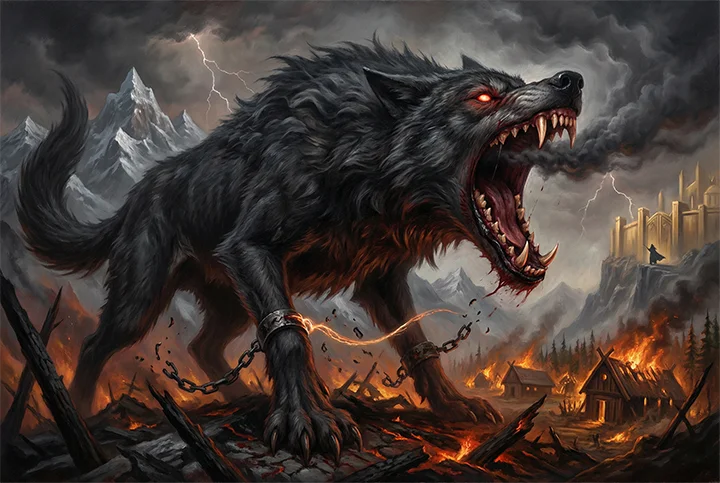
Fenrir ist der größte aller Wölfe in der nordischen Mythologie, der Sohn von Loki und der Riesin Angrboða, und das Wesen, das bestimmt ist, Odin bei Ragnarök zu verschlingen. Er ist eines von drei monströsen Kindern, die Loki und Angrboða geboren wurden, die anderen sind die Weltschlange Jörmungandr und die Totengöttin Hel. Die Götter brachten Fenrir nach Asgard und zogen ihn dort auf, der Prophezeiung über sein Schicksal bewusst, bis sein Wachstum so beunruhigend wurde, dass sie beschlossen, ihn zu fesseln. Die Fesselung wurde durch Täuschung vollbracht, kostete den Gott Tyr seine rechte Hand, und produzierte die Fessel Gleipnir, das bemerkenswerteste Objekt in der nordischen Mythologie: ein Band von unmöglicher Leichtigkeit, das das stärkste je gemachte Ding ist. Fenrir wird auf der Insel Lyngvi gebunden bleiben bis Ragnarök, wenn die Kette bricht und er mit aufgesperrten Kiefern von der Erde bis zum Himmel laufen wird, alles auf seinem Weg verzehrend, bis er Odin erreicht.
Quellen
Die Hauptquellen für Fenrir sind die Prosa-Edda von Snorri Sturluson, insbesondere das Gylfaginning, und mehrere Gedichte der Poetischen Edda einschließlich der Voluspa, der Lokasenna, des Vafthrudnismal und der Hymiskviða. Snorri liefert den detailliertesten Bericht über Fenrirs Aufzucht in Asgard, die drei Versuche, ihn zu fesseln, die Herstellung von Gleipnir und die Ereignisse auf der Insel Lyngvi.
Geburt und Aufzucht in Asgard
Die drei Kinder von Loki und Angrboða wurden den Göttern zur Kenntnis gebracht, die aus der Prophezeiung verstanden, dass großer Schaden von dieser Nachkommenschaft kommen würde. Die Götter handelten gegen alle drei: Jörmungandr wurde in den Ozean geworfen, der Midgard umkreist, Hel wurde gesandt, das Reich der Toten in Niflheim zu regieren, und Fenrir allein wurde nach Asgard gebracht, um unter den Göttern aufgezogen zu werden. Unter den Asen war nur der Gott Tyr bereit, Fenrir zu füttern, als er heranwuchs. Das Wachstum des Wolfes war außerordentlich und zunehmend beunruhigend.
Die drei Versuche, Fenrir zu fesseln
Der erste Versuch der Götter, Fenrir zu fesseln, war mit einer Fessel namens Leyding, die sie ihm als Krafttest präsentierten. Fenrir untersuchte sie und stimmte dem Test zu. Er brach sie beim ersten Kick ohne Schwierigkeiten. Die Götter machten eine zweite Fessel namens Drómi, doppelt so stark wie die erste. Fenrir stimmte zu, testete sie und brach sie ebenfalls, wenn auch mit mehr Aufwand als die erste. Das in den Quellen verzeichnete Sprichwort, von Leyding zu lösen oder von Drómi zu brechen, wurde zu einem Ausdruck für eine große Leistung.
Für den dritten Versuch schickten die Götter Boten nach Svartalfheim, dem Reich der Zwerge, und baten sie, eine Fessel zu machen, die nicht gebrochen werden konnte. Die Zwerge machten Gleipnir aus sechs Dingen, die nicht existieren: dem Geräusch eines Katzenschritts, dem Bart einer Frau, den Wurzeln eines Berges, den Sehnen eines Bären, dem Atem eines Fisches und dem Speichel eines Vogels. Weil diese Dinge nicht in der Welt existieren, hat Gleipnir keine Substanz, der widerstanden oder die gebrochen werden kann. Es ist so weich und glatt wie ein seidenes Band, und es ist das stärkste je gemachte Ding.
Die Insel Lyngvi und Tyrs Hand
Die Götter brachten Fenrir auf die Insel Lyngvi im See Ámsvartnir und schlugen ein Spiel vor. Fenrir betrachtete Gleipnir und vermutete Täuschung. Das Band war zu leicht, zu glatt, zu unähnlich allem, was stark sein sollte. Er stimmte dem Test unter einer Bedingung zu: Einer der Götter muss eine Hand in seinen Mund als Pfand guten Willens legen. Wenn die Götter ihr Wort halten und ihn freilassen, wenn er fragt, verliert er nichts. Wenn nicht, verliert der Gott die Hand.
Alle Götter schauten sich an. Niemand war bereit. Tyr allein trat vor und legte seine rechte Hand in Fenrirs Mund. Die Götter fesselten Fenrir mit Gleipnir. Er testete es und fand heraus, dass er es nicht brechen konnte. Er rief nach Freilass. Die Götter weigerten sich, lachend. Tyr verlor seine rechte Hand. Fenrir wurde mit einer Kette namens Gelgja an einem Felsen namens Gjöll befestigt, und ein Schwert wurde unter seinen Oberkiefer gekeilt, um seinen Mund offen zu halten. Er wird dort bis Ragnarök bleiben. Sein Speichel tropft ununterbrochen von seinen Kiefern und bildet den Fluss Ván.
Fenrir bei Ragnarök
Bei Ragnarök wird die Kette Gleipnir brechen und Fenrir frei laufen. Die Voluspa beschreibt ihn vorwärtskommend mit seinem Mund so weit geöffnet, dass sein Oberkiefer den Himmel kratzt und sein Unterkiefer die Erde entlangschleift. Er verschlingt alles auf seinem Weg. Er tötet Odin und schluckt den Allvater ganz. Unmittelbar danach rächt Odins Sohn Víðarr seinen Vater: Er setzt seinen eisenbeschlagenen Fuß auf Fenrirs Unterkiefer und ergreift den Oberkiefer und reißt den Wolf auseinander.
Fenrirs Kinder
Zwei von Fenrirs Nachkommen werden in den Quellen benannt. Der Wolf Sköll verfolgt die Sonne über den Himmel und wird sie bei Ragnarök fangen. Der Wolf Hati Hróðvitnisson verfolgt den Mond und wird ihn bei Ragnarök fangen. Das Grimnismal und das Gylfaginning verzeichnen beide diese zwei Wölfe im Kontext der kosmischen Jagd, die bei Ragnarök endet, wenn Sonne und Mond schließlich verzehrt werden.
Die moralische Komplexität der Fesselung
Die Prosa-Edda präsentiert die Fesselung Fenrirs mit ungewöhnlicher Aufmerksamkeit für ihre ethischen Dimensionen. Fenrir hat zum Zeitpunkt seiner Fesselung noch niemandem geschadet. Er wird gefesselt, weil die Prophezeiung sagt, er wird Odin in der Zukunft schaden, nicht wegen irgendeiner Tat, die er begangen hat. Die verwendete Täuschung, Gleipnir als Krafttest zu präsentieren, obwohl die Götter keine Absicht hatten, ihn freizulassen, wurde von Fenrir als ein Risiko verstanden, vor dem er sich durch die Forderung nach der Bürgschaft von Tyrs Hand zu schützen berechtigt war. Die Götter versprachen, ihn freizulassen, und taten es nicht. Die Prosa-Edda bemerkt, dass Fenrir deshalb der Wolf der Asen genannt wird wegen dessen, was ihm dort angetan wurde.
Vermächtnis und Bedeutung
Fenrir ist eine der bedeutendsten Figuren in der nordischen Eschatologie, der notwendige Zerstörer, dessen Existenz als Odins Mörder die Bedingung für Víðarrs Existenz als Odins Rächer ist. Die Sequenz Fenrir tötet Odin, Víðarr tötet Fenrir ist eine der am deutlichsten vorherbestimmten Ereignisketten in der Mythologie, in den Quellen nicht als ungewiss, sondern als unvermeidlich dargestellt. Der Wolf, den die Götter unter sich aufzogen, dessen Wachstum sie mit zunehmender Besorgnis beobachteten, dessen Fesselung Täuschung erforderte und einen Gott seine Hand kostete, ist derselbe Wolf, der den Allvater am Ende der Welt verschlingen wird.
OTHRAVAR — Musikalische Hommage
Erleben Sie den Fluss Ván, der sich aus den tropfenden Kiefern des Wolfes bildet, und die Gewissheit des Endes, das auf der Insel Lyngvi wartet, durch die alten Klänge nordischer Volksmusik. Diese Originalkomposition schöpft aus der skaldischen Tradition und wird mit traditionellen Instrumenten wie Tagelharpa, Bukkehorn und Rahmentrommel aufgeführt.