Ship Burials, Cremation and the Norse Rites of the Dead
Overview
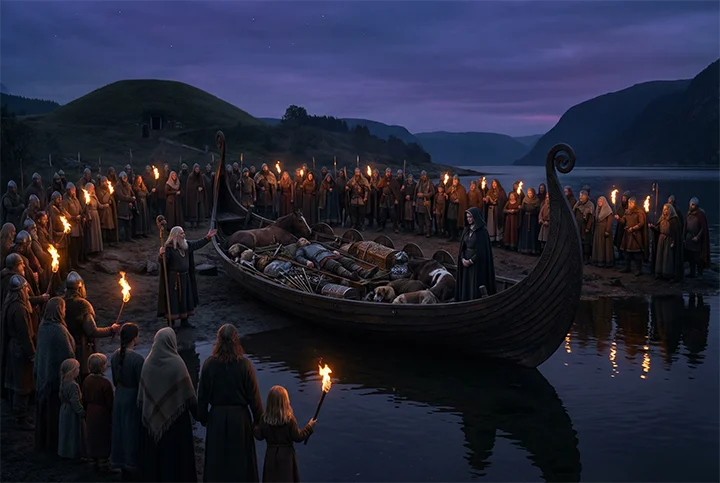
Viking Age burial customs were varied, regionally diverse and deeply connected to Norse religious beliefs about the afterlife, the relationship between the living and the dead, and the social status of the deceased. The Norse world practiced both inhumation and cremation, buried the dead in mounds, flat graves and ships, placed varying quantities of grave goods with the dead depending on their status, and maintained an ongoing relationship with the dead through visits to burial mounds and ritual feasting at funerary sites. The most spectacular form of Norse burial, the ship burial in which a complete vessel was used as the coffin and the center of an elaborate funerary monument, reached its most elaborate expression in the great ship burials of the late eighth and ninth centuries, including the Oseberg burial of around 834 and the Gokstad burial of around 895.
Sources
The primary sources for Viking Age burial customs are archaeological, with thousands of excavated graves from across Scandinavia and the Norse settlement areas providing the material evidence. Textual sources supplement the archaeological record: the Prose Edda describes idealized Norse funeral practice, including Baldur's funeral on the ship Hringhorni, which provides a mythological model for ship burial. The Arab traveler Ibn Fadlan's account of the Volga Rus ship cremation in 921 provides the most detailed surviving description of a Norse cremation ceremony, describing the preparation of the body, the construction of the pyre on the ship, the killing of a slave woman to accompany her master, the ignition of the pyre by the deceased's nearest male relative walking backward, and the construction of a burial mound over the remains afterward.
Ship Burials
The Oseberg ship burial, discovered in a burial mound on the western shore of the Oslofjord in Norway in 1904, is the richest and most elaborately preserved Viking Age ship burial in the archaeological record. The buried vessel, a clinker-built longship approximately twenty-two meters in length, contained the remains of two women whose identities remain debated. The burial goods were extraordinarily rich, including carved wooden sledges, a wagon, high-quality textiles, kitchen equipment, agricultural tools, horses, cattle, and the carved wooden bed posts and tent poles that display the Oseberg style of ornamental carving. The five carved animal-head posts, each produced by a different craftsman in a distinct personal style, are among the most powerful individual objects in Norse art. The Gokstad burial, excavated in 1880, contained a man of approximately sixty years buried in a ship twenty-four meters in length, with horses, dogs, peacocks, a small boat and a large selection of equipment including a tent, bedding, kitchen utensils and a gaming board.
Cremation
Cremation was as common as inhumation in Viking Age Scandinavia and was in some periods and regions more prevalent. The burned remains were typically placed in a pit or pottery vessel and covered with a mound of earth or stones. Ibn Fadlan's account of the Volga Rus ship cremation in 921 provides the most detailed surviving description of a Norse cremation ceremony. He describes the preparation of the body, the pyre construction on the ship, a slave woman volunteering to die with her master, the nearest male relative igniting the pyre walking backward so as not to look at the fire, and the construction of a mound over the ashes afterward. The description is the closest thing to an eyewitness account of a Viking Age religious ceremony that survives in any source.
Grave Goods and Status
The quantity and quality of grave goods placed with the dead varied enormously, from the extraordinarily rich assemblages of the ship burials to simple graves with a single iron knife or no goods at all. This variation reflects differences in the social status of the deceased, the wealth and beliefs of the family conducting the burial, and regional and temporal variation across the Norse world. Male warrior burials typically include weapons: swords, spears, axes, shields and sometimes helmets. Female burials typically include jewelry, domestic equipment including textile-production tools, and sometimes weapons or riding equipment. High-status burials of both sexes include animals, particularly horses, which appear in large numbers in the richest graves.
Burial Mounds and the Living Dead
The Norse tradition of burial in mounds, haugr, reflected a belief that the dead retained a presence and agency within the mound that continued after death. The haugbúar, mound-dwellers, could interact with the living, protect their families, provide counsel in dreams, and be disturbed by improper treatment of their remains or memory. The draugar, animated dead who could leave their mounds to harm the living, represent the threatening aspect of this continuing presence. Several sagas describe encounters between the living and the mound-dead, and the Norse relationship with the dead through their mounds was one of the most practically important aspects of Norse religious life.
Legacy and Significance
Viking Age burial customs provide the richest and most directly recoverable evidence for Norse religious beliefs and social organization in the archaeological record. The ship burials in particular are among the most impressive monumental achievements of medieval European culture, combining naval engineering, funerary art, social display and religious belief in structures that have preserved their contents for over a millennium. The Oseberg and Gokstad ships, now displayed in the Viking Ship Museum in Oslo, remain the most complete and best-preserved examples of Viking Age ships anywhere in the world.